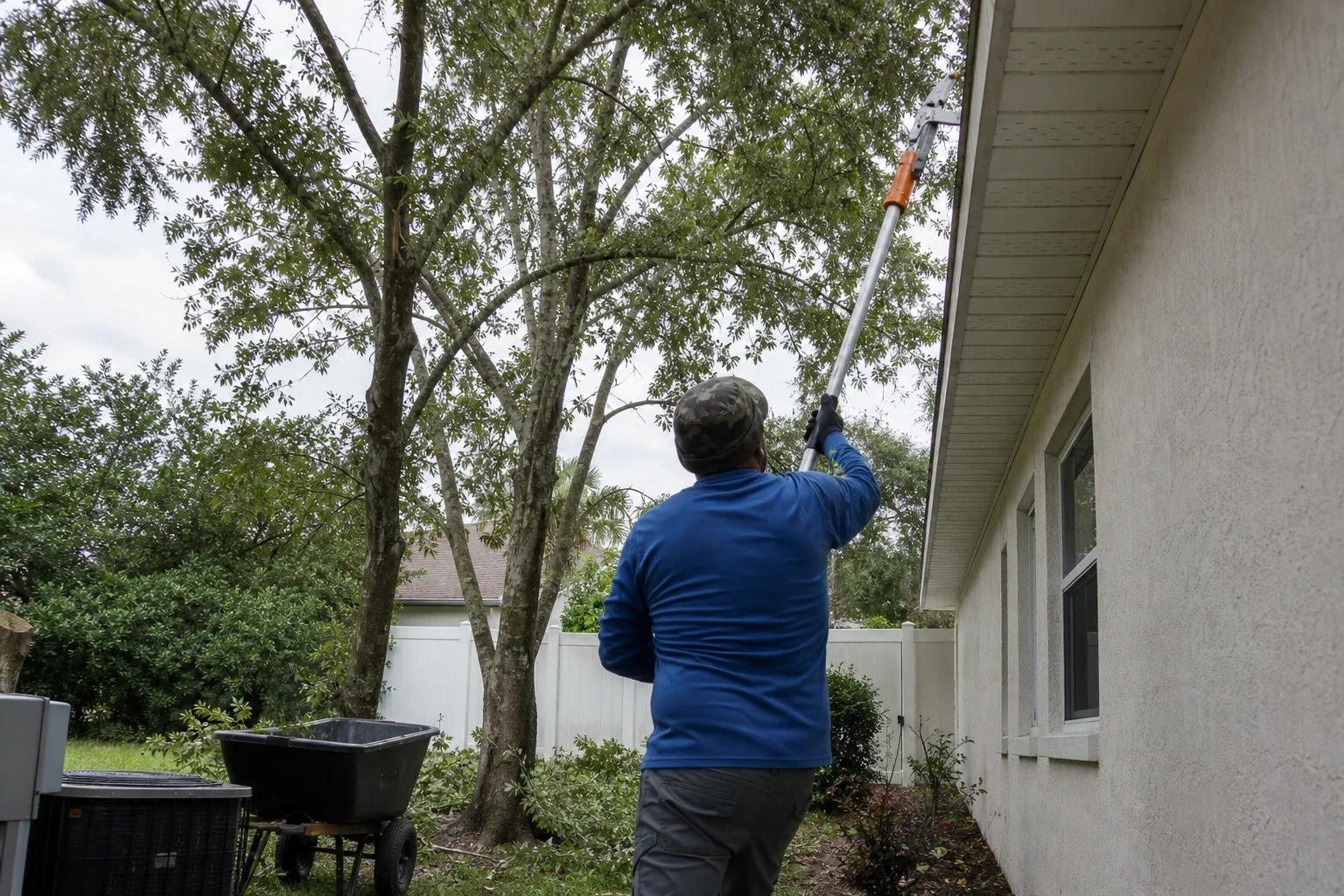
ServicesTree Trimming and Removal
Tree Trimming and Removal in Belle Isle
We prune trees so they grow strong and stay safe over your home, and we take them down when trimming no longer makes sense. You get a clear answer on which one your tree needs, what it costs now and what it saves you later.
Trim or remove: what makes sense for your tree
Most trees don't need to come down. They need the right cuts at the right time. A young oak pruned for good structure costs little and can stand for decades. The same tree left alone may grow weak, crowded limbs that crack in the first big summer storm.
Some trees are past saving. Laurel oaks are common around Central Florida, and they often start to rot from the inside once they get older. Trimming a tree like that is money spent on a problem that keeps coming back. When we see that, we tell you, and we show you why.
We've been in business since 2018. Our job is to look at the cost today next to what the tree will need over the next ten years, so you make a choice that holds up.
What tree work with us includes
- 01
Structural pruning
We remove crossing, rubbing and weakly attached limbs so the tree keeps one strong frame. This matters most on young trees, where a few small cuts now prevent big ones later.
- 02
Crown thinning and clearance
We open up dense canopies so wind passes through instead of pushing the whole tree. We also lift limbs off your roof, driveway and walkways. We don't top trees or strip the inside bare, because both leave a tree weaker than before.
- 03
Deadwood removal
Dead branches fall on their own schedule, usually in a storm. We take them out before they drop on a car or a fence.
- 04
Full tree removal
When a tree has to go, we take it down in sections, lowering heavy pieces with ropes where there's anything below worth protecting. The trunk is cut low to the ground.
- 05
Cleanup and hauling
We rake, blow and haul off branches and wood unless you want to keep some for firewood or mulch. If you want the stump gone too, our stump grinding service finishes the job.
Questions about Tree Trimming and Removal?
Call(407) 289-1778Signs your tree needs attention
Limbs over the roof
Branches resting on or hanging over your home scrape shingles, drop leaves where they don't belong and give a heavy load a short path to the house.
Dead or bare branches
A limb that stays bare while the rest of the tree leafs out is dead. It will break eventually.
Mushrooms, cavities or soft wood
Fungus at the base or hollow spots in the trunk usually mean decay inside. This is the sign that often tips a decision from trimming to removal.
A new lean or lifting soil
A tree that has started leaning, or has cracked soil on one side of the trunk, may be losing its roots. Sandy soil gives roots less grip than people expect.
Splits and cracks
Deep cracks, or a V-shaped fork where two trunks meet, are weak points that tend to fail under wind.
How a tree job runs
- 1
Walkthrough
We come out, look at the tree from the ground up and talk with you about what you want. You get our honest take on trimming versus removal and the cost of each over time.
- 2
Written estimate and permit check
You get a written estimate listing the work tree by tree. If your tree needs a permit before removal, we tell you up front and handle the paperwork.
- 3
Setting up
On the day, we park, lay out ground protection where equipment will roll and mark a safe drop zone. We'll ask you to move cars and keep pets inside.
- 4
The cutting
Climbers make each cut at the branch collar so the tree seals the wound properly. On removals, sections are lowered by rope over beds, fences and roofs.
- 5
Cleanup and walkaround
We clear the debris, blow off hard surfaces and walk the yard with you before we leave.
What moves the price
Every tree is priced on its own, after we see it. The biggest factors are size, how hard it is to reach and what is underneath it. Paying for good pruning every few years usually costs far less than taking down a tree after a big limb has already failed.
- Height and spread
- A tall, wide tree means more climbing, more cuts and more wood to haul.
- Access
- A front-yard tree we can reach from the driveway is quicker than one behind a fence in a tight backyard, where everything comes out by hand.
- What's below it
- Limbs over a roof, pool cage or power lines need roping and slower work. If a utility line is involved, we'll tell you whether the power company has to handle that part first.
- Tree condition
- Rotten or split wood is less predictable, so it takes more care and rigging to bring down.
- Debris and stump
- Hauling everything away costs more than leaving wood on site. Stump grinding is priced separately if you want it.
Tree trimming and removal questions
How often should my trees be trimmed?
Most healthy shade trees do well with pruning every three to five years. Young trees benefit from lighter work more often while their shape is forming. We'll tell you what your trees need, not sell you a yearly visit they don't.
When is the best time to trim before storm season?
Late winter and spring, before hurricane season starts in June, is ideal. That gives you a thinned, cleaned-up canopy before the summer storms arrive. We work year-round, but spring books up.
Do I need a permit to remove a tree?
Sometimes. It depends on the tree's size and type and where you live. We check before any removal and let you know what is required.
Do you trim palm trees too?
Yes, but palms are a different job with their own rules about which fronds to cut. See our palm tree pruning and removal service for that.
Can I pay for a large removal over time?
Yes. Financing is available for amounts as high as $100,000. Terms run anywhere from two to twelve years, and there's no penalty if you pay it off early. Ask about it when we're out for your walkthrough.
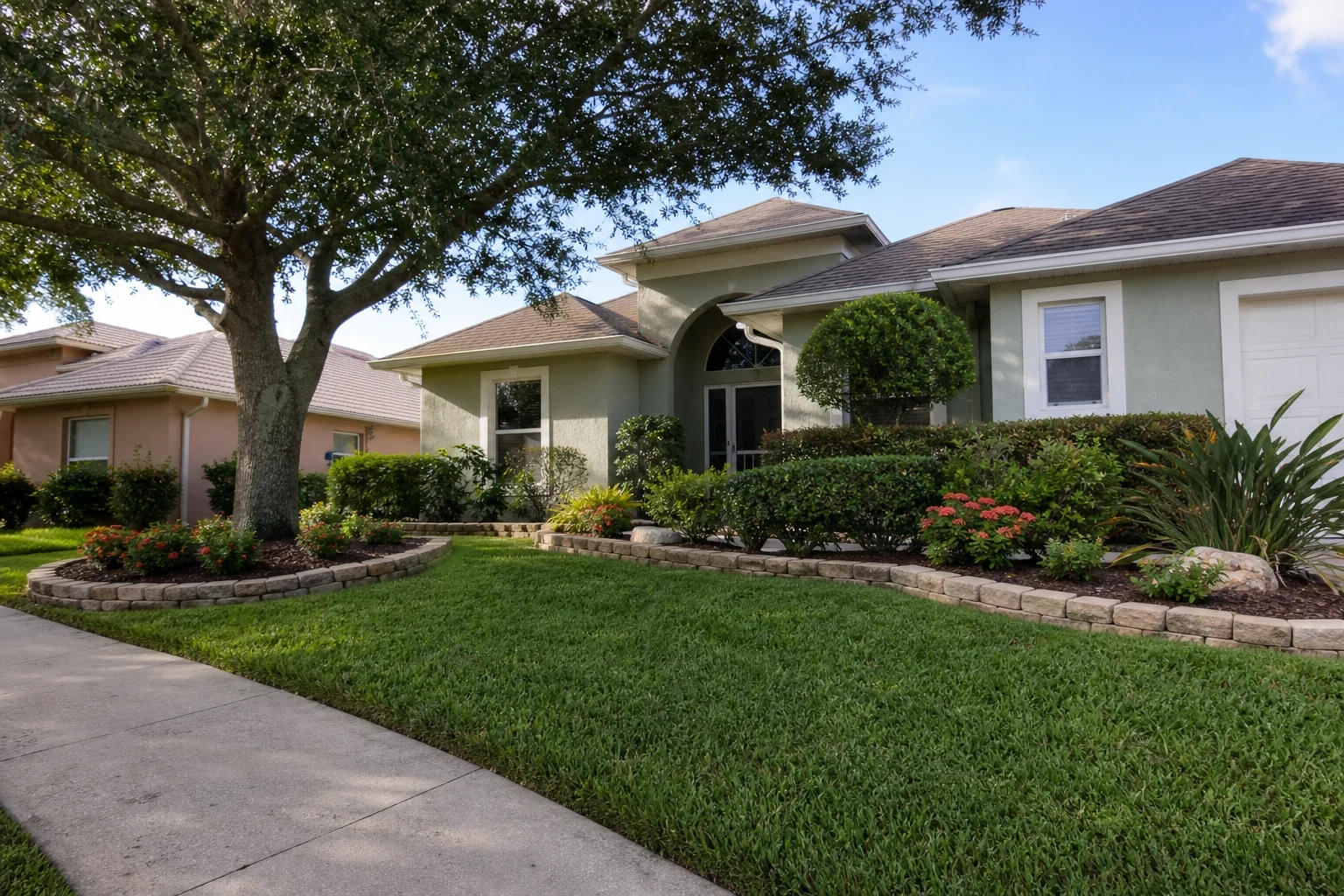
Let's look at your trees together
We'll walk your yard, point out what needs work and what can wait, and give you a written price. The visit is free.