ServicesLandscape Design
Landscape Design in Belle Isle
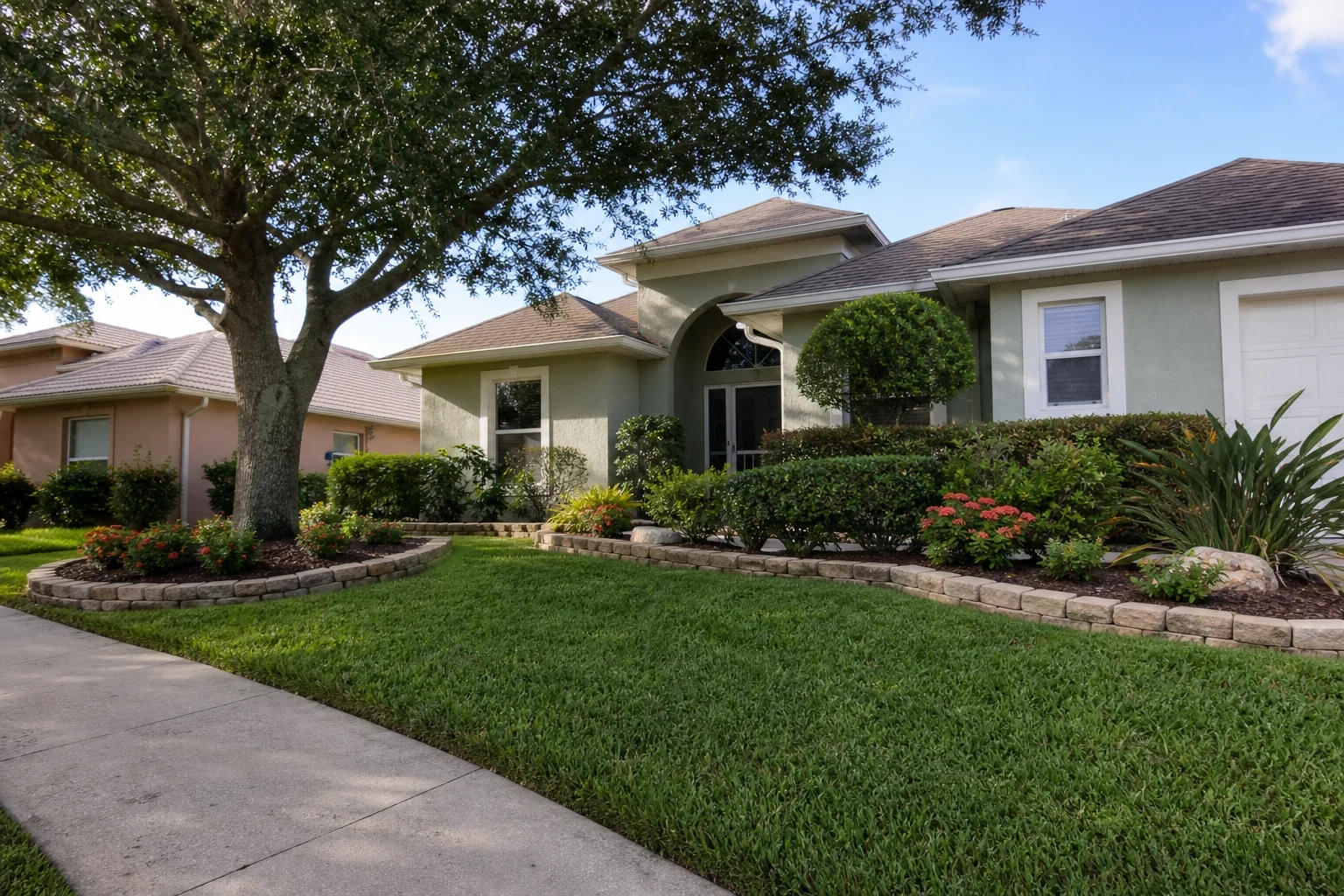
We plan your yard around what it will cost to keep, not just what it costs to plant. You get a layout that fits your sun, soil and water, with plants sized for where they will be in five years, not where they sit on install day.
A plan that still works years from now
Most yards that disappoint were not planted badly. They were planned for the first month. A hedge goes in a foot from the house and needs cutting every three weeks. A sun plant ends up in shade and thins out by the second summer. You pay to fix it later.
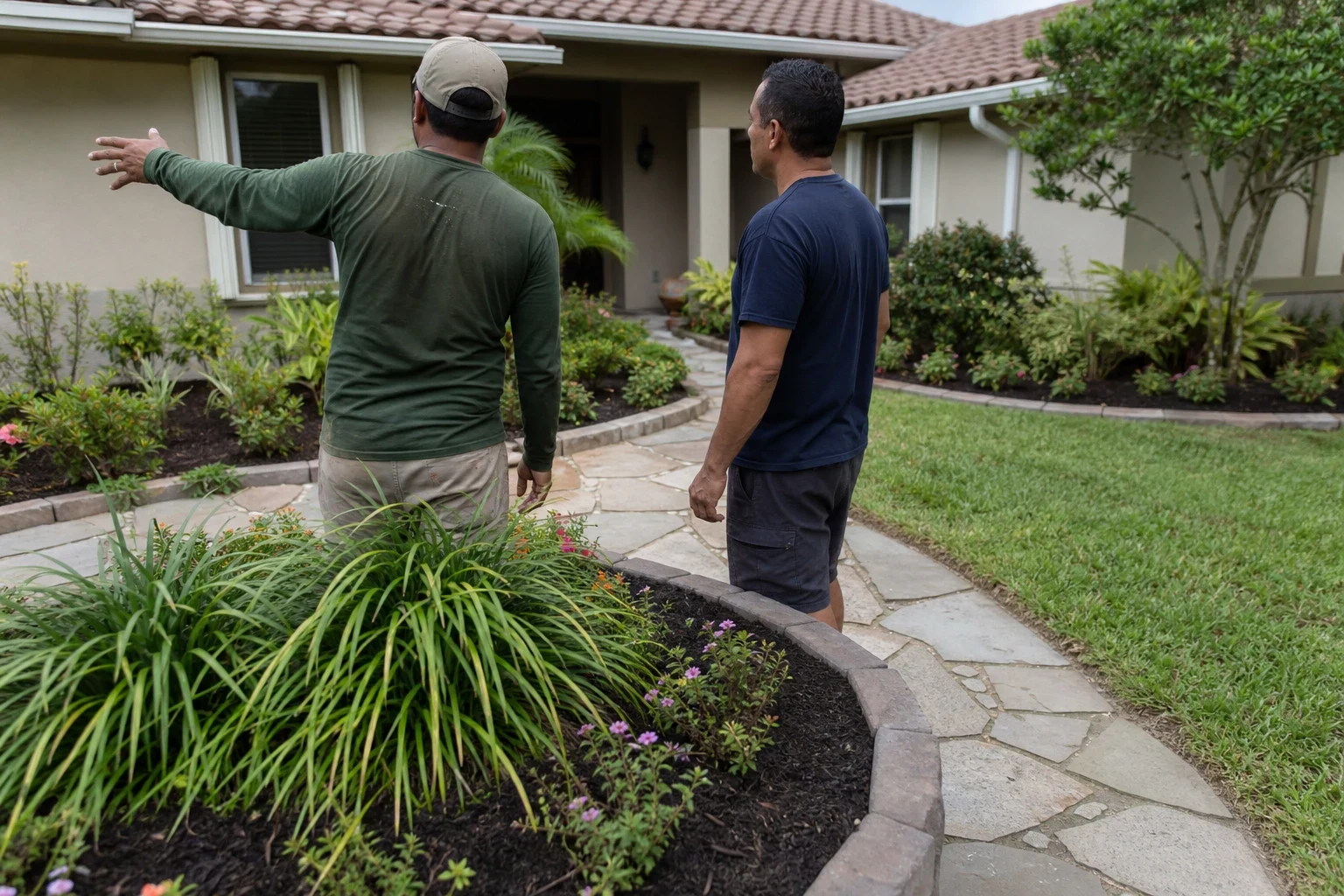
Our landscape design work starts with how your home sits on the lot: where the afternoon sun hits, where water stands after a summer storm, what the sandy soil will and won't hold. Then we put each plant where it can reach full size without a fight.
We have been in business since 2018, and we plan every yard the same way. For each main choice, we tell you the up-front cost and what it asks of you after. Some options cost more on day one and less every year after. You decide with both numbers in front of you.
What the design covers
- 01
Site walkthrough and notes
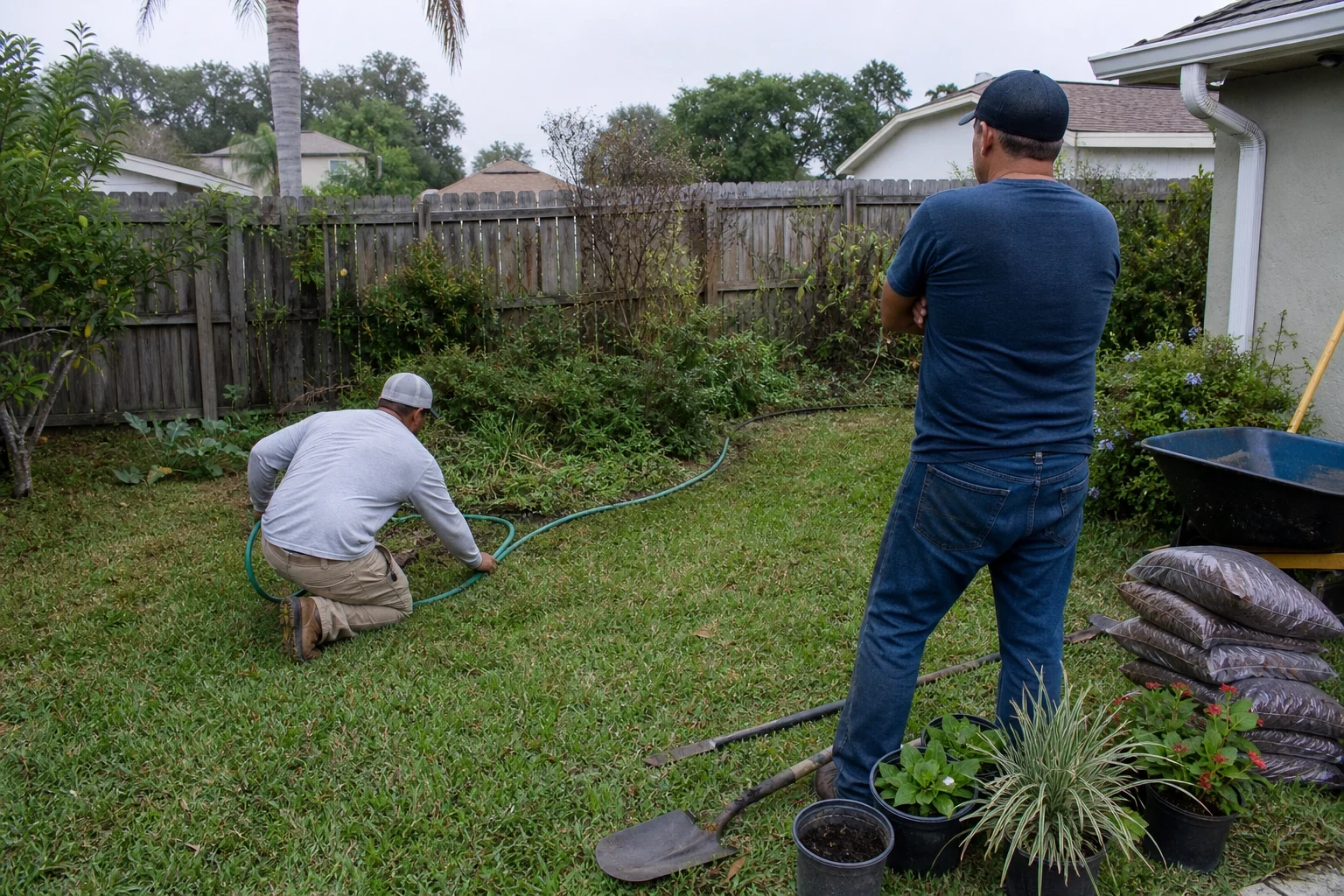
We walk the property with you and note sun, shade, slopes, low spots and what is already worth keeping. Healthy trees and established shrubs often stay. Keeping them saves money.
- 02
Layout drawing
You get a drawing of beds, lawn areas, paths and planting spots. It shows where things go and how much room each plant gets at mature size.
- 03
Plant list with upkeep notes
Each plant is listed with its mature size, water needs and how often it needs trimming. We lean toward plants that handle Florida heat and summer rain without constant care.
- 04
Water grouping
Thirsty plants go together and drought-tolerant ones go together. That lets your irrigation zones run on separate schedules instead of overwatering half the yard. If your system needs changes, our irrigation work covers it.
- 05
Phasing options
If you want to spread the cost out, we split the plan into stages. The parts that are hardest to change later, like grading and hardscape, usually go first.
Questions about Landscape Design?
Call(407) 289-1778Signs a new design makes sense
You trim the same shrubs constantly
If a hedge is always covering a window or the walkway, it is the wrong plant for that spot. Cutting it back harder won't change that.
Beds keep dying back
Plants that fade every summer are usually in the wrong light or the wrong water zone. Replacing them with the same thing just repeats the bill.
Water pools after storms
Standing water near the foundation or in the lawn means the grade or bed layout is working against you. A plan can redirect it.
The yard has no shape
Patchy grass, scattered plants and no clear path to the door. A layout ties it together so each part has a job.
Your water bill is climbing
Lawn and plants watered on one schedule waste a lot. Regrouping plants and trimming back turf in hard spots can cut that.
How the work goes
- 1
Walkthrough
We come out, walk the yard with you and ask how you use it. Kids, dogs, a grill spot, how much time you want to spend on upkeep. This visit is free.
- 2
Draft plan and estimate
We put together the layout and plant list with a written estimate by line item. Each big choice shows the cheaper option next to the longer-lasting one.
- 3
Adjust together
You tell us what you want changed. We revise until it fits your budget and the way you live. If your HOA has to sign off, we give you a clean drawing to hand to the board.
- 4
Install day
We prep beds, fix grading where needed, set plants and lay mulch. Driveways and walks get protected, and we clean up before we leave.
What moves the price
There is no flat price for a design because no two yards need the same thing. The estimate depends on how much area we are changing and what is already there. We give you the full number in writing before any work starts.
- Size of the area
- A front entry bed is a different job than reworking the whole lot. More square footage means more plants, soil and labor.
- Plant size at install
- Larger container plants look full sooner but cost more. Smaller ones cost less and catch up in a season or two. We show you both.
- Removal and prep
- Old shrubs, roots, weedy turf and stumps have to come out first. Heavy removal adds time. Stump grinding or sod installation may be part of it.
- Grading and drainage
- Fixing low spots or reshaping beds to move water takes more labor up front but prevents dead plants and soggy lawn later.
- Hardscape elements
- Pavers, edging, walls or paths add material cost. They also last far longer than plants and cut down on mowing and trimming.
Landscape design questions
Can I spread the install out over a couple of years?
Yes, and plenty of people do. We mark the plan in stages so nothing you put in early gets dug up later. Grading and hardscape usually go in first, then beds and plants.
What plants hold up best here with little care?
Plants that handle sandy soil, summer downpours and dry spring months do best. Muhly grass, coontie, firebush and dwarf yaupon holly are good examples. We pick based on your light and space, not one list for every yard.
Can you work with what I already have?
Yes. If a tree or shrub is healthy and in a good spot, we design around it. Keeping established plants saves money and they already have deep roots.
Can I pay for the whole plan over time?
You can. We can set up a loan of as much as $100,000, and you pick a term anywhere from two to twelve years. If you want to pay it off early, there is no penalty for that. Some people use it to do the full plan in one go instead of waiting on stages.
How long until the yard looks finished?
Install usually wraps up in a few days depending on size. Plants take a season or two to grow to size. We space them for where they will be at maturity, so it may look a little open at first. That is on purpose.
Let's walk your yard
We will look at your sun, soil and drainage and talk through what you want. You get a free estimate with the long-term cost laid out next to the up-front one.