ServicesMulch and Beds
Mulch and Beds in Belle Isle
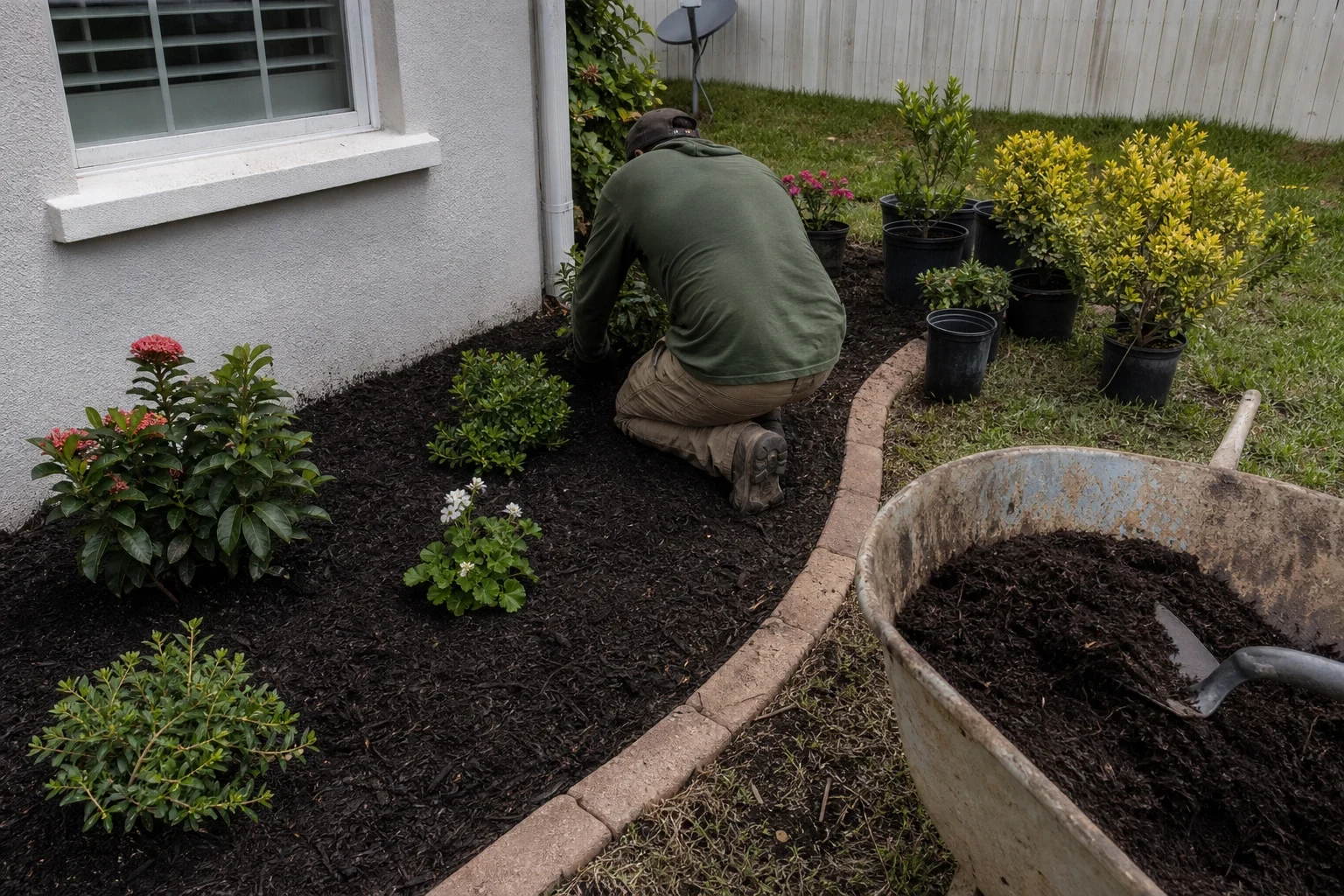
We clean out, edge and mulch your planting beds so they look sharp and stay that way longer. Before you pick a mulch, we show you what each one costs now, how long it lasts in our heat and how much work it takes to keep up.
Beds that cost less to keep up
Mulch does real work. It holds moisture in sandy soil, keeps roots cooler in summer and slows weeds down. When it thins out or gets piled on too thick, beds dry out, weeds take over and plants start to struggle.
Our job is to fix the bed first, then cover it with the right material. That means pulling weeds by the root, cutting a clean edge, filling low spots and setting mulch at a depth that works. We have been in business since 2018, and one lesson keeps coming back: the cheapest bag at the store is rarely the cheapest bed over three years.
So we lay out the trade-offs plainly. Pine bark nuggets look good but break down and can float off in heavy rain. Pine straw is light and low cost but needs topping up more often. Rock costs more up front and barely fades, but it holds heat and is hard to remove later. You choose knowing what you are signing up for.
What our mulch and bed work includes
- 01
Weeds pulled by the root
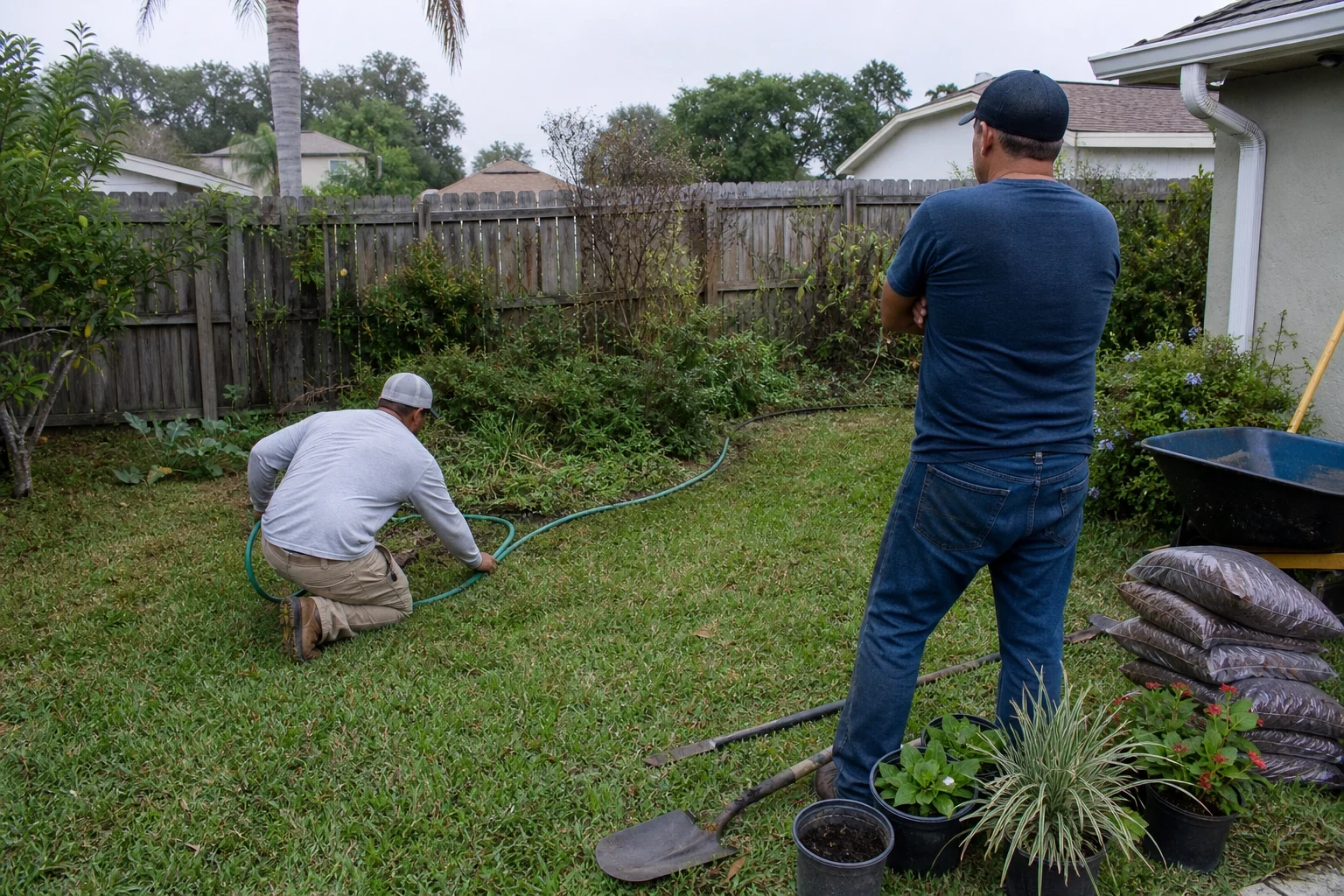
We pull weeds and grass runners out of the bed instead of burying them under fresh mulch. Buried weeds come right back through, usually within weeks.
- 02
Clean bed edges
We cut a crisp line between bed and lawn so turf does not creep in. If you want a permanent border, we will go over edging options and how long each one holds its line.
- 03
A check of the old mulch
We look at what is already there. If old mulch is matted or several inches deep, we thin it or remove it so water can reach the roots again.
- 04
Mulch at the right depth
We spread mulch about two to three inches deep. We keep it pulled back from trunks, plant stems and your home's foundation, because mulch piled against bark or walls invites rot and pests.
- 05
Plant swaps and bed reshaping
If a bed has dead shrubs or bare gaps, we can replace plants or adjust the bed shape while we are there. Bigger layout changes fit better under our landscape design service.
- 06
Tidy finish
Before we pack up, your walks and driveway get swept clear of stray mulch. Every pile of pulled weeds, old mulch and debris rides off on our truck, not in your trash cans.
Questions about Mulch and Beds?
Call(407) 289-1778Signs your beds need attention
Bare soil showing through
Thin mulch lets the sun bake the soil and dry out roots. It also gives weed seeds an open spot to land.
Weeds grow faster than you pull
If you are weeding every weekend and losing, the bed needs a full clean-out and a proper layer of mulch, not another bag sprinkled on top.
Mulch on the sidewalk after storms
If bark ends up on the walk after every afternoon storm, the material or the edge is wrong for that spot. A heavier mulch or a better edge usually fixes it.
Mulch piled up around trees
Cone-shaped mounds against a trunk hold moisture on the bark. Over time that can rot the tree at its base.
Grass creeping into the beds
Runner grasses slip under a weak edge and root in the mulch. Once they are in, they are hard to get out without redoing the bed.
Gray, crusty mulch
Faded mulch can form a crust that sheds water instead of letting it soak in. Raking it loose helps for a week or two, then it crusts again.
How a mulch job runs
- 1
Walkthrough and options
We walk your beds with you, measure them and talk through the mulch types side by side. You get a free estimate that lists the work and the material, so you know the price before we start.
- 2
Prep the beds
On the day, we pull weeds, cut edges and thin or remove old mulch. We also flag sprinkler heads and drip lines so they do not get buried, and we can handle fixes through our irrigation service if something is broken.
- 3
Spread and finish
We lay the new mulch at an even depth, pull it back from trunks and the house, and tidy the edges. Then we clean up the walks, the driveway and any spill onto the lawn.
- 4
Walk it together
We go over the finished beds with you and tell you when to expect the next top-up for the material you picked. Most organic mulch needs a refresh about once a year in Central Florida heat and rain.
What moves the price
Every bed is different, so we price it after we see it. The biggest swings come from how much prep the bed needs and which mulch you choose. We will also tell you what each choice costs to keep up over the years, not just to put down.
- Bed size and depth
- More square footage and a deeper layer mean more material and more time spreading it.
- Material: now versus later
- Pine straw and bark cost less to install but need regular top-ups. Rock costs more on day one and lasts for years with little added, but removing it later is a big job.
- How much prep it needs
- A bed thick with weeds or runner grass takes much longer than one that just needs a fresh layer. Cutting new edges adds time too.
- Access to the beds
- Beds behind a fence or along a narrow side yard mean wheelbarrow trips instead of unloading close by. More carrying means more labor.
- Old mulch removal
- If the old layer is too deep or matted, it has to come out and be hauled away before new mulch goes down.
Mulch and bed questions
Which mulch lasts the longest?
Rock lasts the longest by far, since it does not break down. The trade-off is heat around plants, a higher up-front cost and real work if you ever want to change the bed. Organic mulches like pine bark and pine straw break down faster but feed the soil as they go. We will help you weigh it bed by bed.
Should you put landscape fabric under the mulch?
Under rock, fabric helps keep stones from sinking into sandy soil. Under organic mulch it often backfires, because the mulch breaks down on top of the fabric and weeds root right in that layer. We will tell you which way makes sense for each bed.
Does mulch attract termites?
Wood mulch can give termites a damp spot to live, but it does not create them. We keep mulch a few inches back from your home's foundation and siding so there is a dry gap. That gap is the main thing you can control.
How often will I need fresh mulch?
For pine bark or other wood mulch, plan on a top-up about once a year. Pine straw often needs it a bit sooner. Rock may only need a little added every few years, plus some cleanup of leaves that settle in.
Can I spread the cost of a bigger bed project over time?
Yes. You can borrow as much as $100,000 and pay it back over anywhere from 2 to 12 years, and paying it off early never costs you a penalty. It usually fits best when bed work is part of a larger job, like new planting or a hardscape border. Bring it up during the walkthrough and we will go over the details.
Do you work outside Belle Isle?
Yes. We also do mulch and bed work in nearby areas including Edgewood, Conway, Pine Castle and Orlando. Our service areas page lists the rest.

Let's look at your beds
We will walk your beds with you, show you the mulch options side by side and give you a free estimate. You pick what fits your budget and how much upkeep you want.