ServicesHardscape Installation
Hardscape Installation in Belle Isle
We build paver patios, walkways, driveways and retaining walls that stay level and drain right. Before you pick a material, we lay out what it costs now, how long it lasts and what upkeep it needs, so the choice still makes sense in ten years.
Hardscape Built From the Base Up
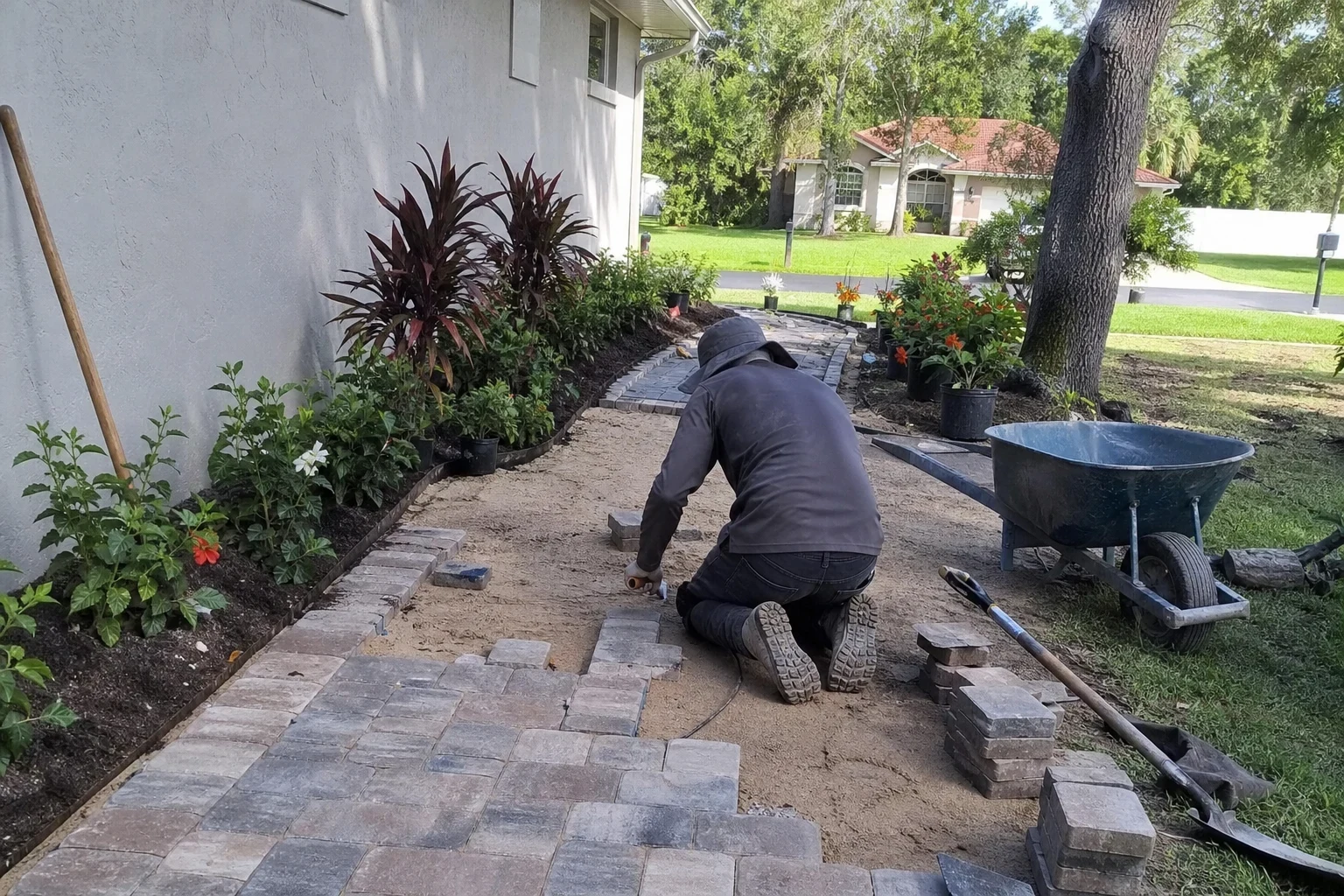
Hardscape is the hard part of the yard. Patios, walkways, driveways, steps, seat walls, retaining walls and fire pits. Most of the work you never see. It is the digging, the base rock and the compaction underneath that decide whether pavers stay flat or start to sink and shift.
Our sandy soil drains fast, but heavy summer storms can wash fine sand out from under a weak base. That is why we dig deep enough, compact in layers and set a firm edge before a single paver goes down. A patio built that way can be lifted and reset in one spot years later instead of torn out.
We have been building outdoor spaces around your home and your neighbors' since 2018. We still walk every job ourselves before we quote it.
What a Hardscape Job Includes
Layout and grading
We mark the footprint, check where water runs today and set a slope that moves rain away from your home. Usually that is about a quarter inch of fall per foot.
Excavation and compacted base
We dig out roots and loose soil, then lay crushed base rock in lifts and compact each one with a plate compactor. Driveways get a deeper base than walkways because they carry cars.
Pavers, stone or block set to line
Concrete pavers, travertine or segmental wall block go down on a screeded sand bed, cut clean at the edges. We check level and pattern as we go, not at the end.
Edge restraint and joint sand
A solid edge keeps pavers from creeping outward. We sweep in polymeric sand, compact it and wet it so the joints harden and resist weeds and ants.
Retaining walls and drainage
Walls get a gravel footing, drain rock behind the block and a perforated pipe where water needs a way out. Skipping that is the main reason walls lean.
Cleanup and haul-off
We remove the dug-out soil, old concrete and scraps, blow off the surface and leave your lawn and beds the way we found them.
Signs It Is Time for New Hardscape
- Cracked or heaving concrete
- Slabs crack when the soil under them moves or tree roots push up. Patching rarely holds. Pavers flex with small movement and single pieces can be swapped.
- Puddles that sit after rain
- Water pooling on a patio or against your home means the slope is wrong. Over time that water stains surfaces and undermines the base.
- Sunken or wobbly pavers
- Low spots and rocking pavers usually point to a thin base or a missing edge. Sometimes we can reset a section. Sometimes the base has to come out.
- A slope that keeps washing out
- If mulch and soil end up on the walkway after every storm, a low retaining wall or terraced bed can hold the grade in place.
- Worn dirt paths
- Where people walk every day, grass gives up. A paver or stepping-stone path fixes the bare strip and keeps sand out of the house.
How the Job Runs
- 1
Walkthrough and written estimate
We come out, measure, look at drainage and access, and talk through materials side by side. You get a written estimate that lists each part of the job.
- 2
Approvals and scheduling
If your HOA needs to sign off, we hand you the drawing and material specs to include with your approval paperwork. We check whether the job needs a permit and handle it when it does.
- 3
Dig and build the base
Day one is usually excavation, base rock and compaction. It is loud for a few hours and the yard looks torn up. That is normal.
- 4
Set, sand and finish
Next we lay the pavers or block, cut edges, install restraint and lock the joints with polymeric sand. Smaller patios often finish in a few days.
- 5
Final walk together
We walk the finished work with you, show you how to care for it and point out anything to watch, like where the downspout water lands.
What Moves the Price
Hardscape is priced by the job, not by a flat rate per square foot. The cheapest material up front is not always the cheapest over the years, so we show you both numbers. We put the price in writing after the walkthrough. If paying over time works better for you, we can finance jobs up to $100,000, with terms from 2 to 12 years and no penalty for paying it off early.
- Size and shape
- More square footage means more base, more pavers and more labor. Curves and patterns with lots of cuts take longer than a straight square.
- Material choice
- Concrete pavers cost less up front. Travertine costs more but stays cooler underfoot by the pool. Sealing adds upkeep every few years either way, so we factor that in.
- What has to come out first
- Removing an old slab, roots or a stump adds hauling and labor. Soft or muddy soil may need extra base.
- Access to the work area
- If a skid steer can reach the backyard, the job goes faster. Tight side yards mean moving base rock by wheelbarrow.
- Walls, steps and drainage
- Retaining walls, steps and drain pipe add materials and time. They also prevent the problems that cost the most to fix later.
Hardscape Questions We Hear Often
- Should I pick pavers or a poured concrete patio?
- Concrete usually costs less to put in. Pavers cost more but handle soil movement better and can be repaired one section at a time. If a concrete slab cracks, the fix is often tearing it out. We walk you through both for your yard.
- Will the pavers sink over time?
- Pavers sink when the base is thin or the edge is missing. We compact base rock in layers and install a solid edge restraint. Heavy loads like parked trucks need a deeper base, and we plan for that when you tell us how the area will be used.
- Do I need a permit or HOA approval?
- Many HOAs want to approve patios, driveways and walls before work starts, so check your rules early. We give you the plans and material details your HOA asks for. Some jobs, like a driveway apron at the street, can need a permit, and we take care of it when required.
- How do I take care of a paver patio?
- Sweep it, rinse it now and then and pull the odd weed early. Joint sand may need topping off after a few years. Sealing is optional but helps with stains and color, and we tell you how often it makes sense for your material.
- Can you build around my existing plants and irrigation?
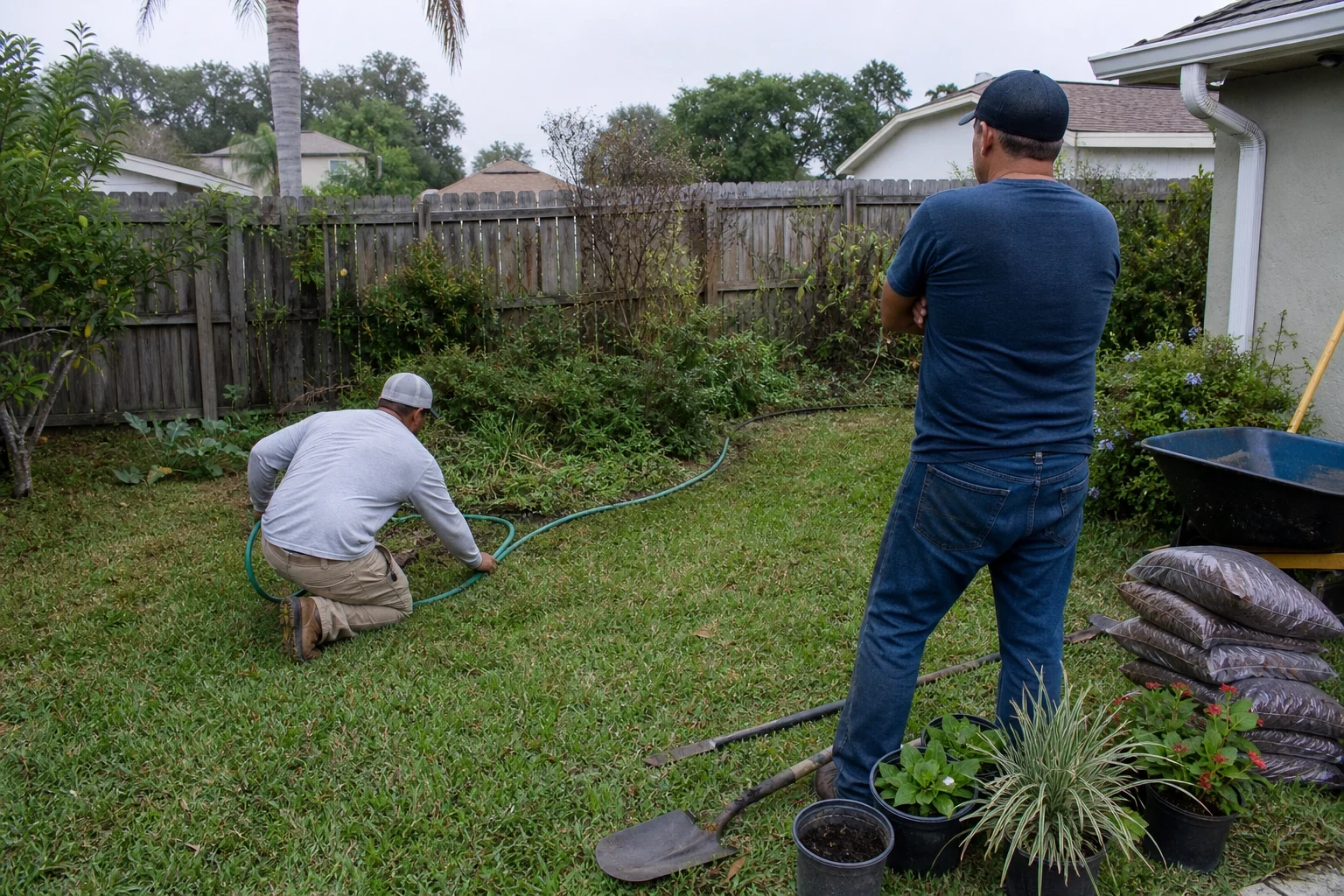
- Yes. We mark sprinkler lines and heads before we dig and reroute them where the patio goes. If the new space changes the beds around it, our irrigation and mulch and beds work can tie it all together.
- How long will a paver patio last?
- Built on a good base with proper drainage, a paver patio can last for decades. Individual pavers may chip or stain, but they can be replaced without redoing the whole surface. That long life is a big part of why the price makes sense.
Plan Your Patio or Wall With Us
We will come out, look at the space and talk through materials, lifespan and upkeep before you spend anything. You get a written estimate at no charge.